






Ram 2500 Diesel vs. Gas: Should You Choose the Cummins or the HEMI?
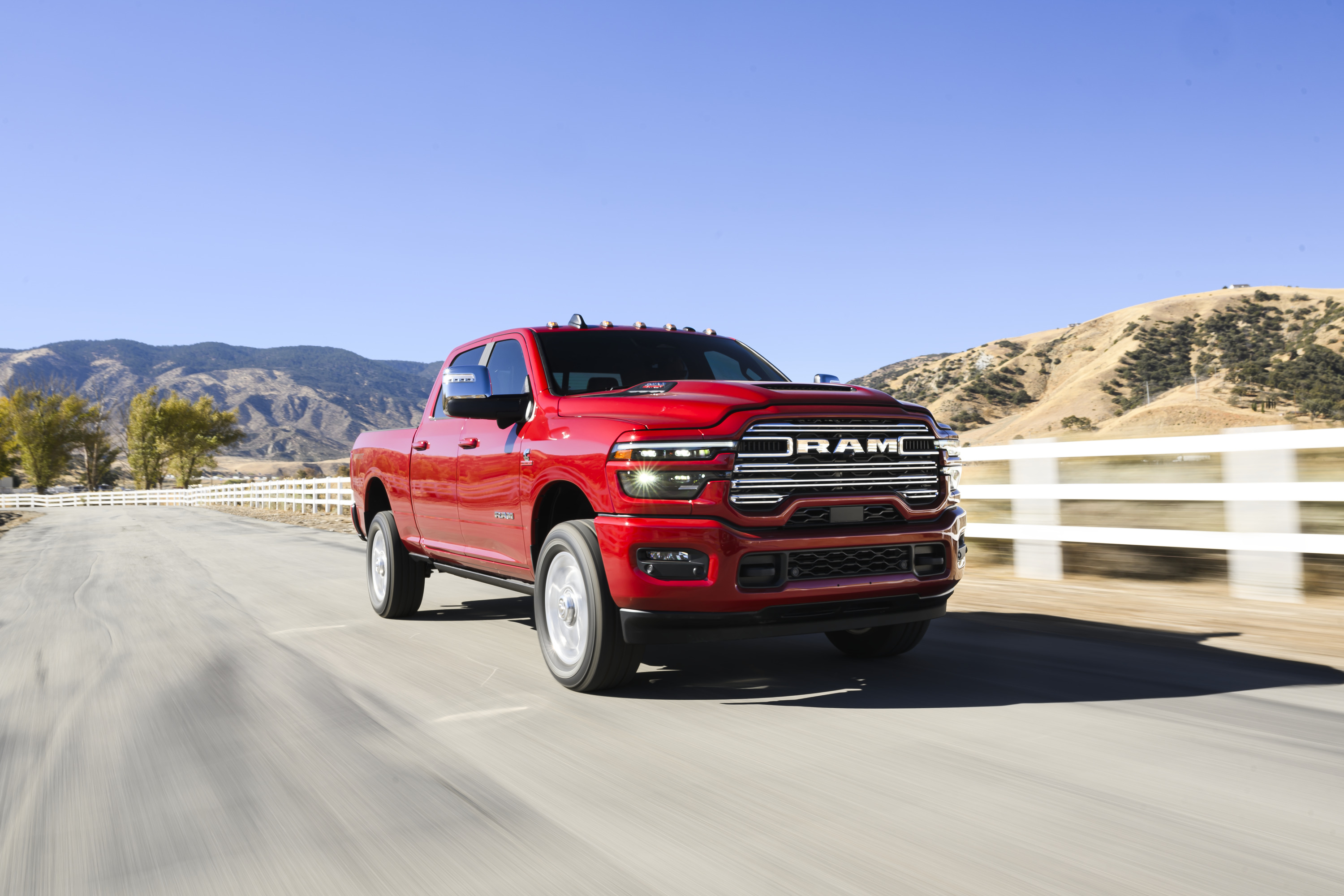
The Two Ram 2500 Engines Side by Side
Ram lists two engines for the 2500, and the numbers tell an interesting story:
- High-Output 6.7L Cummins Turbo Diesel I6: 430 horsepower and 1,075 lb-ft of torque, paired with the TorqueFlite HD eight-speed automatic. Maximum towing is 20,000 pounds, and maximum payload is 3,600 pounds.
- 6.4L HEMI V8: 405 horsepower and 429 lb-ft of torque, paired with the TorqueFlite 8 eight-speed automatic. Maximum towing is 17,750 pounds, and maximum payload is 3,930 pounds.
Horsepower is close. Torque is not. The Cummins makes about two and a half times the HEMI’s torque, which is the force that gets a heavy trailer moving and keeps it moving up a grade. Notice the payload line, though. The gas truck can carry more in the bed, because the diesel engine adds weight to the front of the truck.
Engine choice is the first decision in the build, so settle it early, then choose the cab, bed, and trim around it. Both maximums depend on configuration, so check the specific cab, bed, and axle combination before you buy. You can compare builds on our Ram 2500 inventory page.
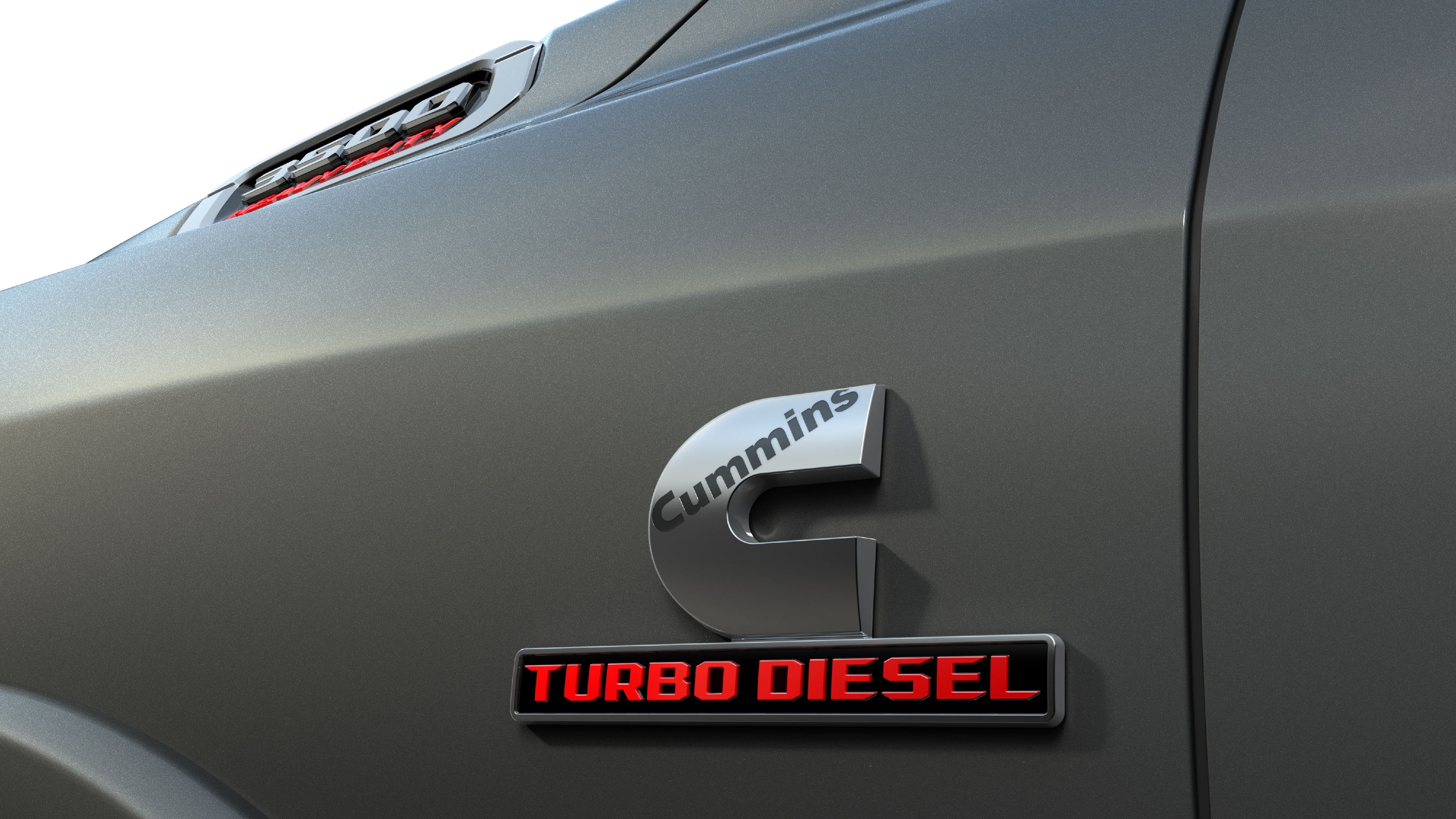
Why the Cummins Wins for Heavy, Frequent Towing
Diesel engines produce their torque at low engine speeds, right where you need it when pulling away from a stop or climbing with a full load. That’s why the Cummins feels relaxed with a big fifth-wheel or equipment trailer behind it. Other advantages:
- Better fuel economy, especially while towing.
- A reputation for longevity, with many diesel trucks running well past the mileage where gas engines are typically traded in.
- Stronger resale value, so you often get more back when you sell.
- Longer intervals between oil changes than a gas engine typically needs.
- An available Automatic Smart Exhaust Brake on the Ram 2500, which helps control speed on long downgrades and saves wear on your brakes.
If you regularly tow near the top of the 2500’s range, or you’re considering a gooseneck or fifth-wheel, the diesel is the natural choice. If your loads keep growing, look at a Ram 3500 heavy-duty truck for even more capacity.
Why the HEMI Makes Sense for Many Owners
The gas engine isn’t the budget option so much as the practical one for a lot of drivers. Consider the HEMI if:
- You tow occasionally, such as a boat or camper a few weekends a year, rather than every day.
- You need more payload for tools, materials, or a slide-in camper, since the HEMI truck carries more.
- You want a lighter truck, which tends to suit off-road use better.
- You want a lower purchase price, because the diesel adds significantly to the cost of the truck.
Gas is also cheaper per gallon than diesel and easier to find at every station. Gas engines start more easily in cold weather, and they don’t need diesel exhaust fluid, an additive that modern U.S. diesels require. Maintenance is simpler, and nearly any mechanic knows the engine. For a truck that spends most of its life commuting with an empty bed and hitches a trailer only a handful of times a year, the HEMI’s lower purchase price and cheaper fuel usually come out ahead.
If you’re not sure you even need a heavy-duty truck, read our comparison of the Ram 1500 vs. Ram 2500 before you decide on an engine.
Owning a Diesel Through an Illinois Winter
A Cummins handles cold weather well when you prepare for it. Diesel fuel can thicken, or gel, in deep cold, and diesel engines are harder to start than gas engines on frigid mornings. A few habits keep you out of trouble:
- Plug in the engine block heater on the coldest nights if your truck has one.
- Use a winter fuel additive to help prevent gelling.
- Keep the diesel exhaust fluid tank topped off before long trips.
- Don’t run the tank dry. A diesel that runs out of fuel has to be primed before it will restart.
None of this is a reason to avoid a diesel. It’s simply part of owning one in a place where January mornings can drop well below zero. Diesel maintenance usually costs more than gas maintenance, largely because of the exhaust aftertreatment system, so stay on schedule. Our service department works on both Cummins and HEMI-powered Rams.
Frequently Asked Questions
Is the Ram 2500 diesel worth it?
It is if you tow heavy loads often. The High-Output Cummins makes 1,075 lb-ft of torque and tows up to 20,000 pounds, and diesels typically return better fuel economy when towing and hold their value well.
Which Ram 2500 engine has more payload?
The 6.4L HEMI V8. Ram lists a maximum payload of 3,930 pounds for the HEMI and 3,600 pounds for the Cummins, because the diesel engine weighs more.
How much can a Ram 2500 tow with the HEMI?
Ram lists a maximum towing capacity of 17,750 pounds with the 6.4L HEMI V8, depending on configuration. The Cummins diesel raises that to 20,000 pounds.
Do diesel trucks have problems in cold weather?
Diesel fuel can gel in extreme cold, and diesel engines are harder to start than gas engines in frigid weather. A block heater and a winter fuel additive help, and gas engines don’t have these concerns.
Can I test drive a Ram 2500 diesel and gas in Lockport?
Yes. Visit Bettenhausen CDJR of Lockport at 16471 W. 159th St. or call 815-524-0642, and we’ll set up both engines so you can compare them, ideally with a trailer similar to yours in mind.
The Ram 2500 diesel vs gas choice comes down to how much and how often you tow. Heavy, frequent towing points to the Cummins. Lighter towing, bigger payloads, and short trips point to the HEMI. Truck owners from Joliet, Plainfield, and Homer Glen can compare both side by side here. When you’ve picked your engine, explore truck financing options and let’s get the right Ram working for you.
Displaying bettenhausen-cdjr-lockport-ram-hd-diesel-vs-gas-blog.html.
0 comment(s) so far on Ram 2500 Diesel vs. Gas: Should You Choose the Cummins or the HEMI?